
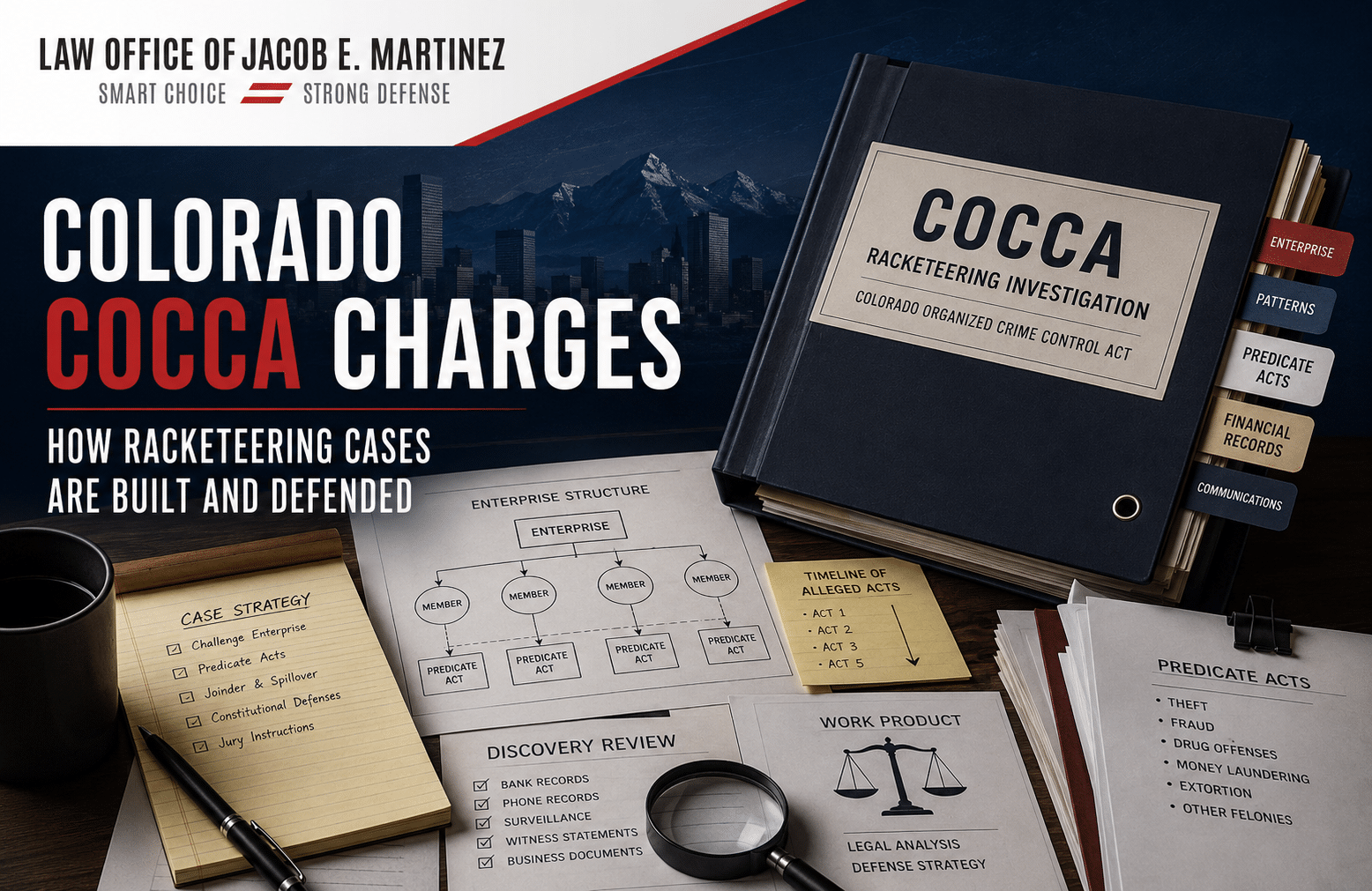
Colorado COCCA Charges: How Racketeering Cases Are Built and Defended
August 18, 2026


Under Colorado law, a juvenile is any person under 18 years of age. And if a juvenile commits a crime, he or she can either be charged as a juvenile or an adult depending on the circumstances.
In following with the Colorado Juvenile Code, the goal of charging a minor as a juvenile is basically to “preserve and strengthen family ties whenever possible.” This means that Colorado is committed to looking out for a child’s welfare and to provide care, [...]
The law often lags far behind new technology—sometimes with disastrous results.
One huge example of this is the rise of sexting among teens. Until the law is modified, minors can find themselves facing child pornography charges for sharing explicit photos via mobile technology. And it’s not just criminal charges that teens face for sexting—under Colorado law, they could be forced to register as sex offenders.
The town of Cañon City, Colorado is learning this the hard way. Hundreds of students [...]
While our nation’s youth crime rates have declined considerably in the last 20 years, the US continues to put more children and teenagers in juvenile detention centers than any other developed country. Our juvenile incarceration rate is seven times higher than Britain’s, and 18 times higher than France’s rate. Each year, we spend millions of taxpayer dollars keeping children and teens behind bars.
While these numbers are frightening on their own, it’s even more frightening to consider the effects of [...]
Colorado COCCA charges are racketeering charges used when prosecutors claim a person participated in an enterprise through a pattern of criminal activity. These cases often grow out of drug, theft, burglary, fraud, identity theft, or financial investigations that are later reframed as organized conduct.
A COCCA count is not automatic just because several people were charged together or because prosecutors believe more than one crime occurred. The state must prove specific structural elements, including an enterprise and a pattern of [...]
Most criminal cases in Denver do not end with a jury verdict. They end with a decision: whether to accept a plea agreement, reject the offer, keep negotiating, or prepare for trial. That decision can shape your record, your freedom, your sentence, your probation terms, and your future long after the court date.
A plea bargain is not just “taking a deal.” It is a legal agreement that may involve reduced charges, dismissed counts, sentencing limits, probation terms, restitution, treatment [...]
A police crash report can make a serious collision look settled before the defense has examined the evidence. It may assign fault, estimate speed, describe the point of impact, and frame the driver’s conduct as reckless or impaired. In a Denver vehicular assault case, those early conclusions can influence charging decisions, plea negotiations, and how prosecutors present the case.
The problem is that a police report is not proof. Officers often prepare crash reports based on witness statements, final vehicle [...]
