When Denver Police Use Confidential Informants: How the Defense Challenges Reliability
September 12, 2026


Digital evidence is often key in identity theft cases, but it’s not always as clear-cut as it seems. IP addresses, emails, and transaction records may look convincing but can easily be misunderstood.
If you’re accused of identity theft, don’t face it alone. At the Law Office of Jacob Martinez, we can help challenge misleading evidence and protect your rights. Reach out to us today for guidance and support from a skilled criminal defense attorney.
Common Examples of Digital Evidence in[...]White-collar crimes happen behind computer screens, in boardrooms, or through a simple email. For the accused, the situation can be overwhelming. One wrong move, one misunderstood email, or even an honest mistake can lead to criminal charges. And the consequences aren’t just financial—they can destroy careers, reputations, and personal lives.
If you’re facing accusations of white-collar crime, you need to act fast. Speak to our Denver, CO criminal defense attorneys from the Law Office of Jacob Martinez to discuss your [...]
Identity theft is a severe and complex criminal offense with significant legal challenges. For criminal defense lawyers in Denver, navigating the intricacies of identity theft cases requires a deep understanding of the law, precedents, and best practices.
This blog aims to provide a comprehensive guide for defense attorneys, offering practical insights and strategies to build a robust defense for their clients facing identity theft charges.
Understanding Identity Theft Laws in DenverDenver, like many jurisdictions, has specific statutes addressing identity [...]
Identity theft is a growing concern in the digital age, affecting millions of individuals worldwide. Like many other states, Colorado has implemented specific laws to address and combat identity theft. Understanding the legal implications of identity theft in Colorado is essential for both victims and the general public. This blog post explores the legal framework surrounding identity theft in Colorado, including relevant statutes, penalties, and available remedies.
Defining Identity Theft in ColoradoUnder Colorado law, identity theft is defined [...]
Colorado, like all states, has laws against credit card fraud and identity theft. But what’s the difference between the two?
To put it simply, credit card fraud involves using someone else’s credit card without their permission or knowledge. At the same time, identity theft goes much further—it involves stealing someone else’s personal information (including Social Security numbers, bank account numbers, driver’s license numbers, etc.) and using it to commit crimes.
These crimes occur all the time, and understanding [...]
A confidential informant almost never speaks to the judge who signs the warrant. Instead, the judge reads a detective’s sworn summary of what an unnamed person allegedly said. That gap can become one of the most important issues in a Denver drug, weapons, theft, or other criminal case.
The defense does not cross-examine the informant when the warrant is issued. At that stage, the focus is on the affidavit itself: what the informant allegedly knew, how police verified the information, [...]
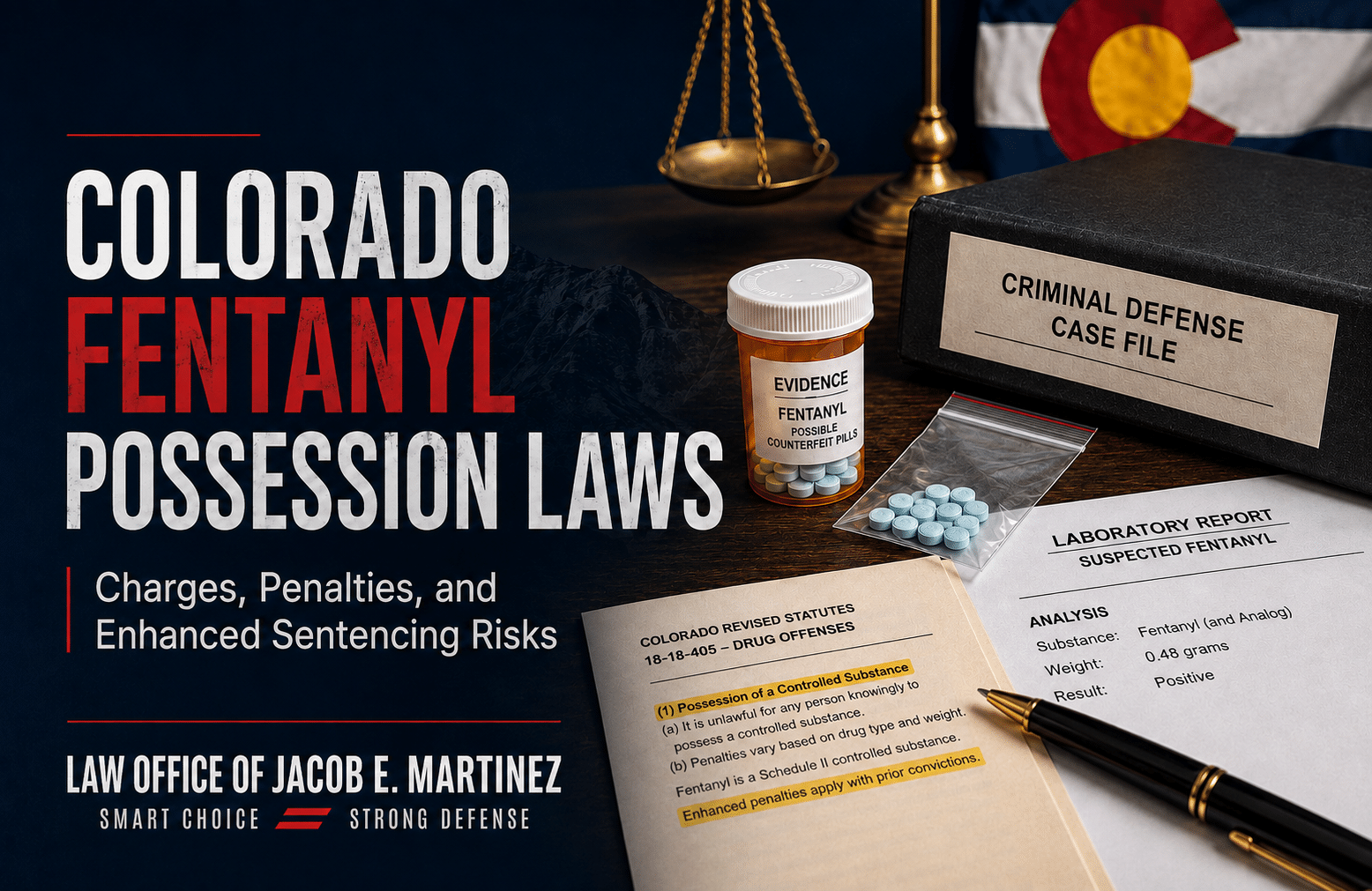
Colorado fentanyl possession charges can become serious felonies at relatively low weight thresholds. The law focuses on the weight of the material, compound, mixture, or preparation containing fentanyl rather than only the amount of pure fentanyl inside it. That means a small-looking quantity of powder or counterfeit pills can result in a much more serious charge once the substance is tested and weighed.
Weight is only part of the case. What the accused person knew, whether the state can prove [...]
Colorado COCCA charges are racketeering charges used when prosecutors claim a person participated in an enterprise through a pattern of criminal activity. These cases often grow out of drug, theft, burglary, fraud, identity theft, or financial investigations that are later reframed as organized conduct.
A COCCA count is not automatic just because several people were charged together or because prosecutors believe more than one crime occurred. The state must prove specific structural elements, including an enterprise and a pattern of [...]