When Denver Police Use Confidential Informants: How the Defense Challenges Reliability
September 12, 2026


Trespassing, a seemingly innocuous act, can lead to serious legal ramifications, especially in the state of Colorado. Whether you’re hiking in the Rockies or wandering through urban areas, knowing the ins and outs of trespassing laws is crucial to avoiding legal trouble.
This blog post delves into Colorado’s trespassing laws, exploring the different degrees of offenses and their potential consequences. Additionally, we’ll discuss the importance of building a strong defense with the help of an experienced criminal defense lawyer.
What[...]
Vandalism is a serious offense that can have significant consequences, both legally and socially. In Denver, like in many other cities across the United States, laws are in place to deter and penalize acts of vandalism.
In this blog, we will explore vandalism penalties in Denver, shedding light on the legal repercussions individuals may face for alleged property damage. By understanding these consequences, we hope to raise awareness about the importance of respecting others’ property and the potential legal pitfalls [...]
Right now, it’s hard to miss that it’s election season. Political signs are everywhere and in such a highly polarized political climate, the urge to do something to your neighbor’s political sign can feel overwhelming.
Take a deep breath!
While it’s not against the law to disagree with someone’s political views, it is against the law to tamper with someone else’s property. So if you mess with your Colorado neighbor’s political signs there could be legal ramifications.
In fact, getting [...]
Property crimes consist of a broad range of offenses that involve the theft, destruction, or damage to property. Property crimes range in severity from low-level misdemeanors to quite serious felonies that can be punishable by decades behind bars.
Crimes against property are charged based on the property damaged or stolen, and with the exception of robbery, do not typically involve a show or threat of force against someone. However, property crimes can quickly turn violent, even if the defendant’s original [...]
See if this sounds familiar: “If cops don’t have to worry about arresting people for marijuana, they can pay attention to crimes that actually matter.”
Most of us have heard numerous variations of this argument over the years, but until 2012, it was just theoretical. Then Colorado and Washington legalized recreational marijuana, and researchers and statisticians started chomping at the bit.
Well, a few weeks ago a study was published in Police Quarterly that seems to possibly validate those types [...]
A confidential informant almost never speaks to the judge who signs the warrant. Instead, the judge reads a detective’s sworn summary of what an unnamed person allegedly said. That gap can become one of the most important issues in a Denver drug, weapons, theft, or other criminal case.
The defense does not cross-examine the informant when the warrant is issued. At that stage, the focus is on the affidavit itself: what the informant allegedly knew, how police verified the information, [...]
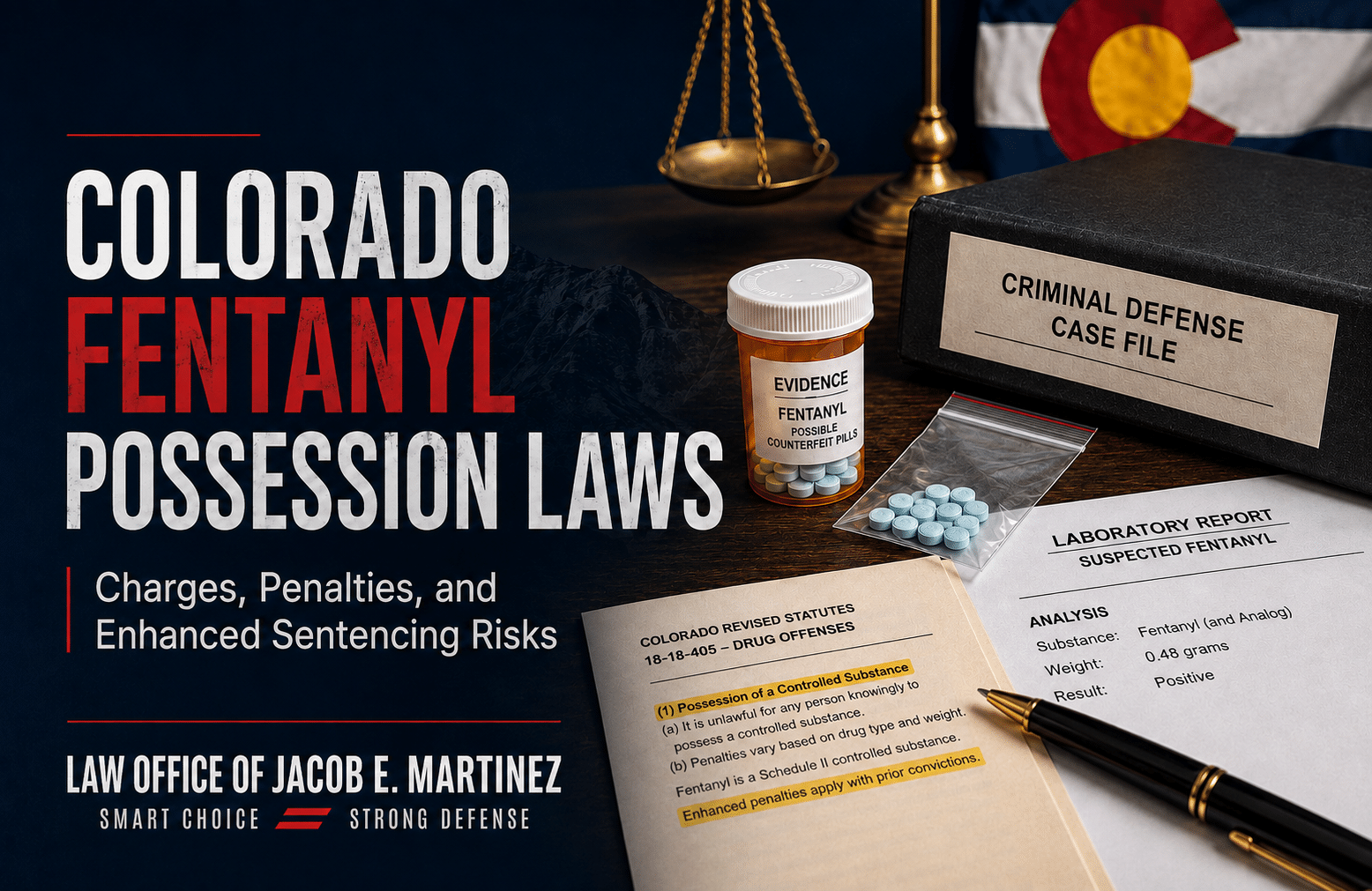
Colorado fentanyl possession charges can become serious felonies at relatively low weight thresholds. The law focuses on the weight of the material, compound, mixture, or preparation containing fentanyl rather than only the amount of pure fentanyl inside it. That means a small-looking quantity of powder or counterfeit pills can result in a much more serious charge once the substance is tested and weighed.
Weight is only part of the case. What the accused person knew, whether the state can prove [...]
Colorado COCCA charges are racketeering charges used when prosecutors claim a person participated in an enterprise through a pattern of criminal activity. These cases often grow out of drug, theft, burglary, fraud, identity theft, or financial investigations that are later reframed as organized conduct.
A COCCA count is not automatic just because several people were charged together or because prosecutors believe more than one crime occurred. The state must prove specific structural elements, including an enterprise and a pattern of [...]