
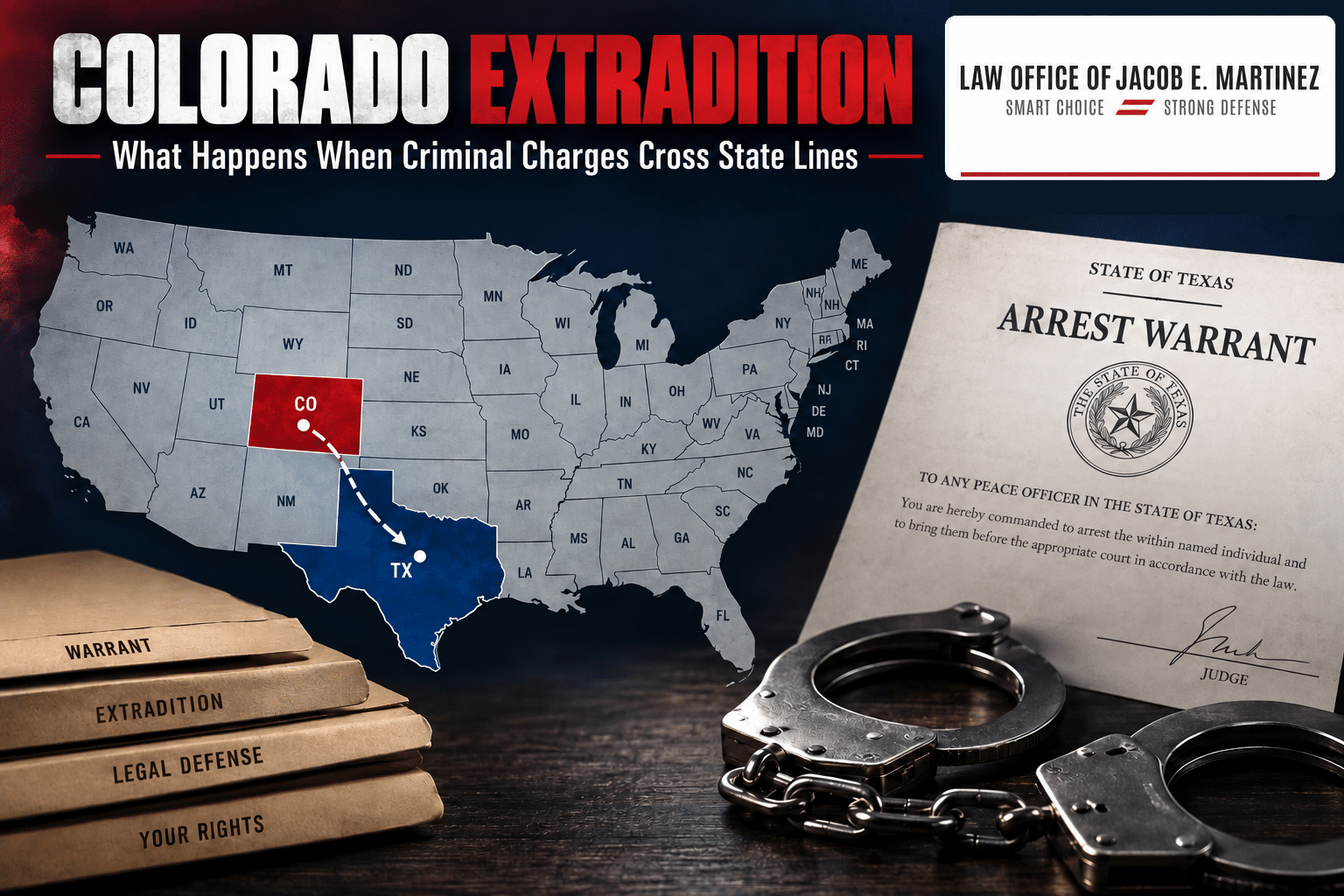
How Colorado Extradition Works for Out-of-State Criminal Charges
September 22, 2026


Posted by: Jacob E. Martinez
Category: Criminal Defense
Extradition is about where a criminal case will be handled—not whether the person is guilty. If someone is arrested in Colorado on another state’s warrant, the immediate questions are usually whether to waive extradition, whether bail is available, how long the process may take, and what can actually be challenged before the person is returned.
The same issue can run in the other direction. A person may be arrested in another state because Colorado issued the warrant. In that situation, [...]
Posted by: Jacob E. Martinez
Category: Criminal Defense
A confidential informant almost never speaks to the judge who signs the warrant. Instead, the judge reads a detective’s sworn summary of what an unnamed person allegedly said. That gap can become one of the most important issues in a Denver drug, weapons, theft, or other criminal case.
The defense does not cross-examine the informant when the warrant is issued. At that stage, the focus is on the affidavit itself: what the informant allegedly knew, how police verified the information, [...]
Posted by: Jacob E. Martinez
Category: Drug Crimes | Fentanyl
Colorado fentanyl possession charges can become serious felonies at relatively low weight thresholds. The law focuses on the weight of the material, compound, mixture, or preparation containing fentanyl rather than only the amount of pure fentanyl inside it. That means a small-looking quantity of powder or counterfeit pills can result in a much more serious charge once the substance is tested and weighed.
Weight is only part of the case. What the accused person knew, whether the state can prove [...]
Posted by: Jacob E. Martinez
Category: COCCA Racketeering
Colorado COCCA charges are racketeering charges used when prosecutors claim a person participated in an enterprise through a pattern of criminal activity. These cases often grow out of drug, theft, burglary, fraud, identity theft, or financial investigations that are later reframed as organized conduct.
A COCCA count is not automatic just because several people were charged together or because prosecutors believe more than one crime occurred. The state must prove specific structural elements, including an enterprise and a pattern of [...]
Posted by: Jacob E. Martinez
Category: Criminal Defense | Plea Bargains
Most criminal cases in Denver do not end with a jury verdict. They end with a decision: whether to accept a plea agreement, reject the offer, keep negotiating, or prepare for trial. That decision can shape your record, your freedom, your sentence, your probation terms, and your future long after the court date.
A plea bargain is not just “taking a deal.” It is a legal agreement that may involve reduced charges, dismissed counts, sentencing limits, probation terms, restitution, treatment [...]
Professional examination of gaming mathematics, probability theory, and regulatory compliance frameworks enables informed decision-making within structured entertainment environments. These analytical resources investigate diverse gaming methodologies, international oversight protocols, and research-based approaches to responsible participation in licensed gaming platforms.
Research Framework Disclaimer: These materials serve exclusively for academic research and analytical investigation purposes. Mathematical probability models, RTP computational analyses, and statistical research data represent theoretical long-term mathematical expectations that do not predict individual session outcomes or guarantee specific results. Content access requires age verification of 18+ years and adherence to applicable local regulatory compliance requirements. Research participants should establish predetermined analytical boundaries, utilize simulation modes for mechanical investigation, and consult professional resources if gaming-related behaviors become concerning or indicate dependency patterns.
Jury Trial - Not Guilty
Jury Trial - Not Guilty
Arapahoe 1st Degree Assault/Vehicular Assault[...]
Jury Trial - Not Guilty
Denver Domestic Violence Assault Case[...]
Jury Trial - Not Guilty
Denver D.V. Assault[...]
Jury Trial - Not Guilty
Denver Careless Driving Resulting in Death[...]
Jury Trial - Not Guilty
Jefferson County Felony Menacing[...]
Jury Trial - Not Guilty
Adams County DUI[...]
Jury Trial - Not Guilty
Jefferson County DUI[...]
Jury Trial - Not Guilty
Jefferson County DUI[...]
Jury Trial - Not Guilty
Jefferson Vehicular Assault/DUI[...]
Jury Trial - Not Guilty
Jefferson County DUI[...]
Jury Trial - Not Guilty
Boulder County DUI case[...]
Jury Trial - Not Guilty
Arapahoe County DUI case[...]
Jury Trial - Not Guilty
Adams County DUI case[...]
Jury Trial - Not Guilty
Douglas County DUI case[...]
Jury Trial - Not Guilty
Gilpin County DUI case[...]
Dismissed
Broomfield County Probation Revocation case[...]
Dismissal
Arapahoe County DUI case[...]
Deferred Judgment
Arapahoe County DUI case[...]
Deferred Judgment
Douglas County DUI case[...]
Deferred Judgment
Larimer County DUI case[...]
Deferred Judgment
Arapahoe County DUI Case[...]
Deferred Judgment
Denver Felony Burglary Case[...]
Deferred Judgment
Arapahoe County DUI case[...]
Dismissed
Arapahoe County Protection Order Case[...]
Dismissed
Golden Destruction of Property case[...]
Dismissed
Jefferson County Protection Order case[...]
Dismissed
Jefferson County Domestic Violence case[...]
Dismissed and Sealed
Jefferson County DUI case[...]
Dismissed
Denver Major Traffic Offense case[...]
Dismissed and Sealed
Broomfield County Domestic Violence case[...]
Dismissed
Summit County DUI Revocation[...]
Dismissed
Denver DUI Revocation[...]
Dismissed
Denver DUI Revocation[...]
Dismissed
Denver DUI +.2 Involving Accident and Injury case[...]
Dismissed
Denver DUI/Habitual Traffic Offender case[...]
DISMISSAL
Denver District Aggravated Theft[...]
Dismissed
Greenwood Village Assault case[...]
Dismissal
Elbert County DUI[...]
Dismissed
Arapahoe County Domestic Violence case[...]
Dismissal
Jefferson County DUI[...]
Dismissal
Denver Municipal Assault[...]
Dismissed
Boulder County Domestic Violence Assault case[...]
Dismissed
Wheat Ridge Assault case[...]
Dismissed
Jefferson County DUI case, with 2+ Prior Convictions[...]
Dismissed
Arapahoe County Domestic Violence case[...]
Dismissed
Broomfield County Domestic Violence case[...]
Dismissed with No Charges Filed
Jefferson County Felony Theft case[...]
Dismissed
Arapahoe County Felony Theft case[...]
Dismissed
Boulder County Felony Theft case[...]
