When Denver Police Use Confidential Informants: How the Defense Challenges Reliability
September 12, 2026


Under Colorado law, a juvenile is any person under 18 years of age. And if a juvenile commits a crime, he or she can either be charged as a juvenile or an adult depending on the circumstances.
In following with the Colorado Juvenile Code, the goal of charging a minor as a juvenile is basically to “preserve and strengthen family ties whenever possible.” This means that Colorado is committed to looking out for a child’s welfare and to provide care, [...]
The law often lags far behind new technology—sometimes with disastrous results.
One huge example of this is the rise of sexting among teens. Until the law is modified, minors can find themselves facing child pornography charges for sharing explicit photos via mobile technology. And it’s not just criminal charges that teens face for sexting—under Colorado law, they could be forced to register as sex offenders.
The town of Cañon City, Colorado is learning this the hard way. Hundreds of students [...]
While our nation’s youth crime rates have declined considerably in the last 20 years, the US continues to put more children and teenagers in juvenile detention centers than any other developed country. Our juvenile incarceration rate is seven times higher than Britain’s, and 18 times higher than France’s rate. Each year, we spend millions of taxpayer dollars keeping children and teens behind bars.
While these numbers are frightening on their own, it’s even more frightening to consider the effects of [...]
A confidential informant almost never speaks to the judge who signs the warrant. Instead, the judge reads a detective’s sworn summary of what an unnamed person allegedly said. That gap can become one of the most important issues in a Denver drug, weapons, theft, or other criminal case.
The defense does not cross-examine the informant when the warrant is issued. At that stage, the focus is on the affidavit itself: what the informant allegedly knew, how police verified the information, [...]
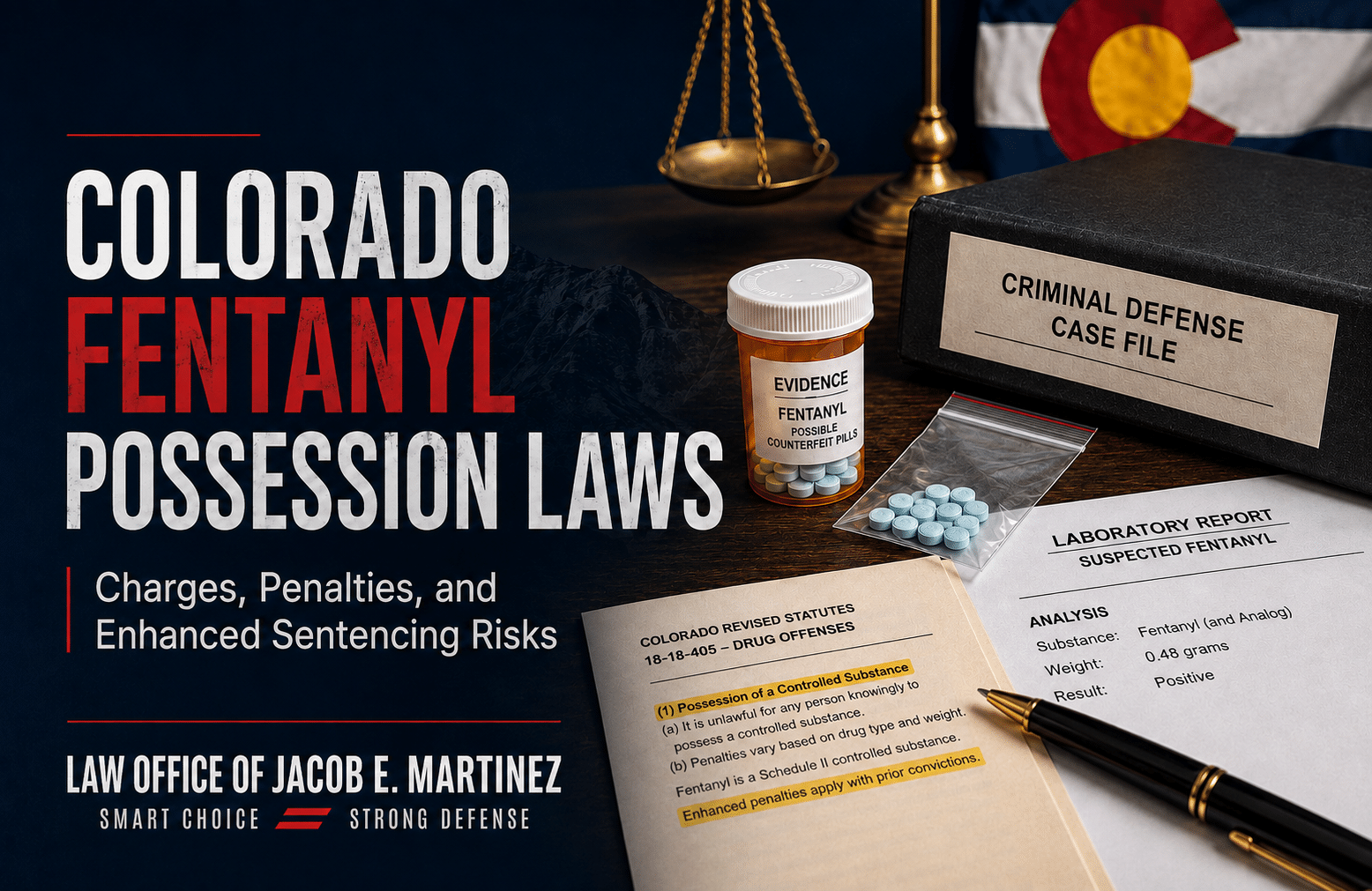
Colorado fentanyl possession charges can become serious felonies at relatively low weight thresholds. The law focuses on the weight of the material, compound, mixture, or preparation containing fentanyl rather than only the amount of pure fentanyl inside it. That means a small-looking quantity of powder or counterfeit pills can result in a much more serious charge once the substance is tested and weighed.
Weight is only part of the case. What the accused person knew, whether the state can prove [...]
Colorado COCCA charges are racketeering charges used when prosecutors claim a person participated in an enterprise through a pattern of criminal activity. These cases often grow out of drug, theft, burglary, fraud, identity theft, or financial investigations that are later reframed as organized conduct.
A COCCA count is not automatic just because several people were charged together or because prosecutors believe more than one crime occurred. The state must prove specific structural elements, including an enterprise and a pattern of [...]