When Denver Police Use Confidential Informants: How the Defense Challenges Reliability
September 12, 2026


Carrying a concealed weapon is a serious responsibility—and in Colorado, the laws around it can be more complicated than they seem. If you carry a firearm or are thinking about getting a permit, it’s essential to understand your rights and obligations under state law. Because when things go wrong, they can go very wrong.
Even a simple mistake—like carrying in a restricted area or letting your permit lapse—can lead to criminal charges. That’s why knowing the law and calling a [...]
Facing a weapons charge in Denver can feel like the odds are stacked against you. Colorado’s strict weapons laws mean even a minor infraction can result in severe consequences, from hefty fines to jail time. But being accused doesn’t mean you’re guilty. At the Law Office of Jacob Martinez, we know that every case has two sides, and we’re here to ensure your voice is heard. If you’re dealing with weapons charges, don’t wait—contact our weapons crime attorney today to [...]
Carrying a firearm legally in Denver comes with a certain level of responsibility—and that includes knowing how to handle encounters with the police. Whether you’re driving through the city with a concealed weapon or openly carrying in another part of Colorado, a routine stop can quickly turn into a stressful situation. Understanding the proper steps to take can help prevent unnecessary escalation and keep both you and the officer safe.
Understanding Firearm Laws in DenverIn Colorado, open carry is [...]
Colorado’s laws regarding weapons offenses are designed to maintain public safety and prevent criminal activities involving firearms and other weapons. However, several misconceptions surrounding these laws can lead to confusion and potential legal issues.
In this blog post, we will address some of the common misunderstandings associated with Colorado weapons offenses, clarify legal definitions, highlight situations that may lead to wrongful accusations, and emphasize the importance of building a strong defense with an experienced criminal defense lawyer.
Misconception: Open Carry[...]In the realm of criminal law, the intersection of mental health and weapon possession cases presents a multifaceted challenge for both defendants and legal professionals. Denver, like many other cities, grapples with the delicate task of addressing mental health issues within the context of criminal charges, particularly those related to the possession of weapons.
This blog aims to shed light on the intricate relationship between mental health and weapon possession cases, exploring how mental health can be a pivotal factor [...]
A confidential informant almost never speaks to the judge who signs the warrant. Instead, the judge reads a detective’s sworn summary of what an unnamed person allegedly said. That gap can become one of the most important issues in a Denver drug, weapons, theft, or other criminal case.
The defense does not cross-examine the informant when the warrant is issued. At that stage, the focus is on the affidavit itself: what the informant allegedly knew, how police verified the information, [...]
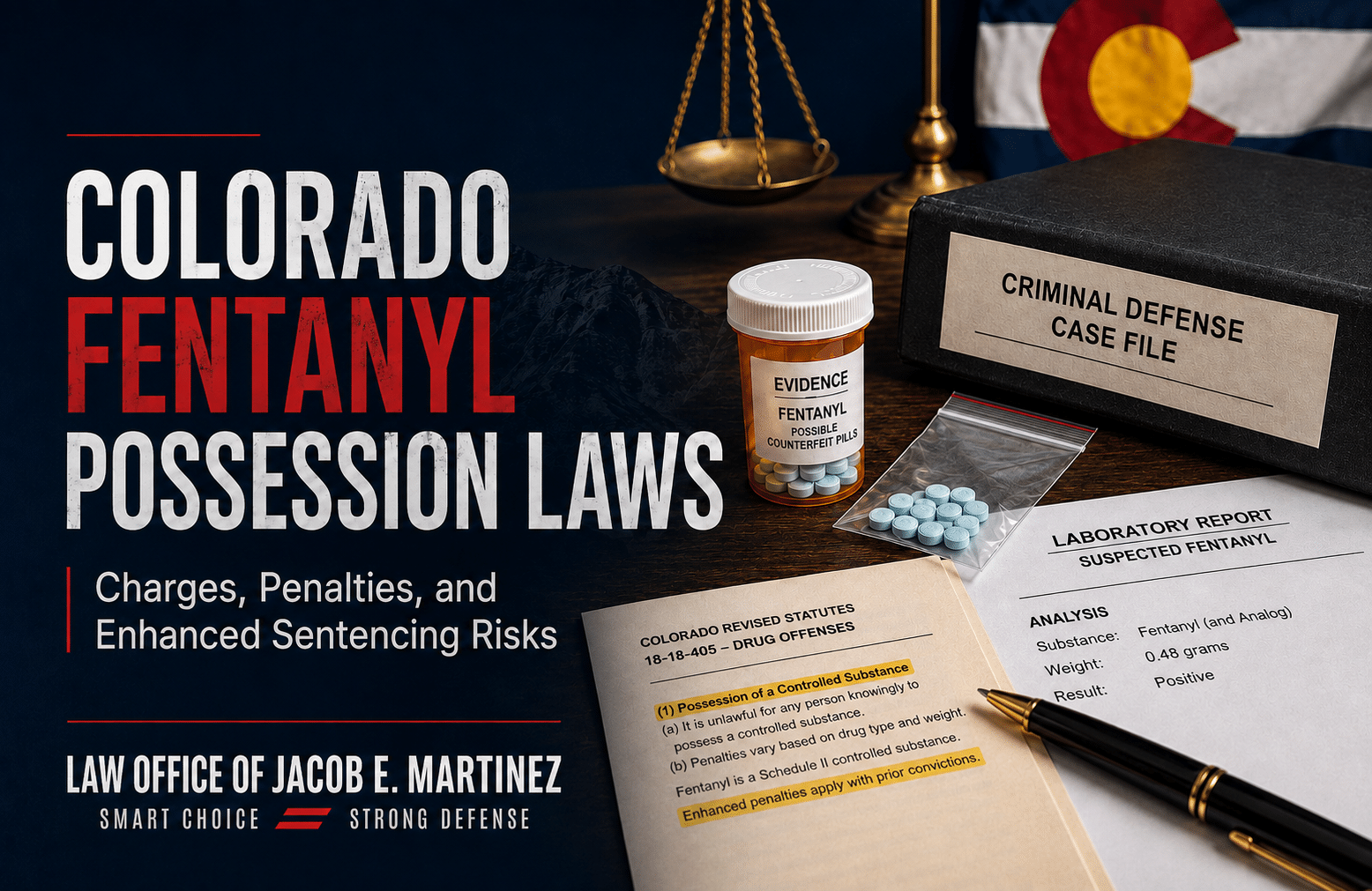
Colorado fentanyl possession charges can become serious felonies at relatively low weight thresholds. The law focuses on the weight of the material, compound, mixture, or preparation containing fentanyl rather than only the amount of pure fentanyl inside it. That means a small-looking quantity of powder or counterfeit pills can result in a much more serious charge once the substance is tested and weighed.
Weight is only part of the case. What the accused person knew, whether the state can prove [...]
Colorado COCCA charges are racketeering charges used when prosecutors claim a person participated in an enterprise through a pattern of criminal activity. These cases often grow out of drug, theft, burglary, fraud, identity theft, or financial investigations that are later reframed as organized conduct.
A COCCA count is not automatic just because several people were charged together or because prosecutors believe more than one crime occurred. The state must prove specific structural elements, including an enterprise and a pattern of [...]