
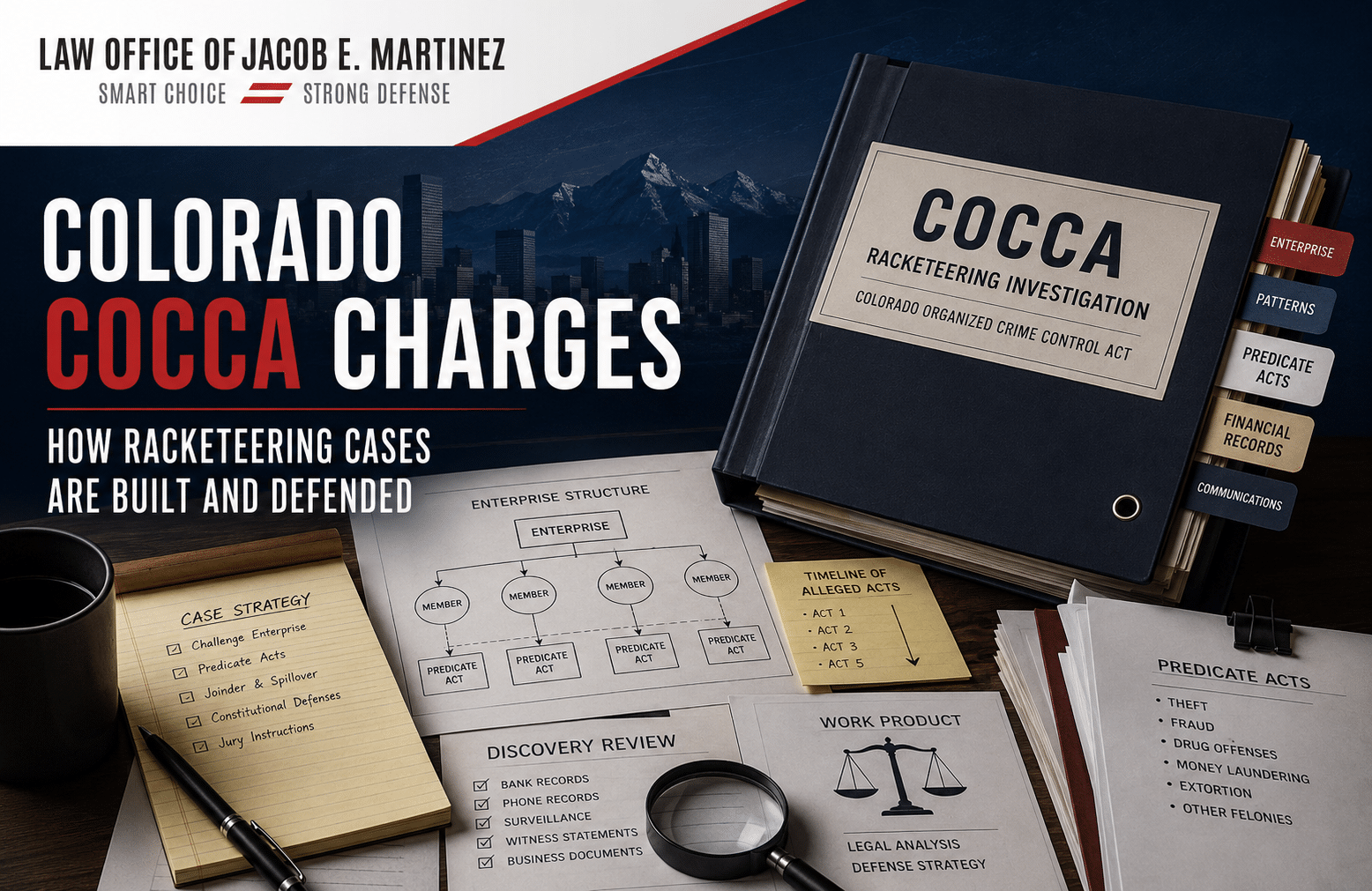
Colorado COCCA Charges: How Racketeering Cases Are Built and Defended
August 18, 2026


On June 27, the United States Supreme Court concluded a historic gun rights case by upholding a federal ban on individuals who have been convicted of misdemeanor domestic violence from owning or purchasing firearms. The court voted 6-2 in favor of upholding the ban.
The case, Voisine vs. United States, involved two men from Maine: Stephen Voisine and William E. Armstrong III. Both men were petitioning for their right to own a firearm despite their past domestic violence convictions.
Stephen [...]
Though many people are aware that federal law restricts felons from owning firearms, they may not be aware that Colorado also restricts the gun rights of individuals convicted of domestic violence crimes—even if the offense was a misdemeanor.
In 2013, Colorado passed a law preventing convicted domestic abusers from purchasing guns. If a misdemeanor domestic violence charge shows up on a background check, gun retailers cannot sell that person a firearm.
The law also made it illegal for offenders to [...]
Microphones are being used to put a stop to gun crime.
Sounds like something out of science fiction, right? Or a ridiculous Saturday Night Live skit? But police in Denver allege that this powerful new technology, called the ShotSpotter, has helped them to catch two-thirds more gun crime after one year in use.
Not surprisingly, the Denver police department recently made the decision to renew and expand the Shotspotter program. The Bureau of Alcohol, Tobacco, and Firearms provided funding for [...]
Colorado COCCA charges are racketeering charges used when prosecutors claim a person participated in an enterprise through a pattern of criminal activity. These cases often grow out of drug, theft, burglary, fraud, identity theft, or financial investigations that are later reframed as organized conduct.
A COCCA count is not automatic just because several people were charged together or because prosecutors believe more than one crime occurred. The state must prove specific structural elements, including an enterprise and a pattern of [...]
Most criminal cases in Denver do not end with a jury verdict. They end with a decision: whether to accept a plea agreement, reject the offer, keep negotiating, or prepare for trial. That decision can shape your record, your freedom, your sentence, your probation terms, and your future long after the court date.
A plea bargain is not just “taking a deal.” It is a legal agreement that may involve reduced charges, dismissed counts, sentencing limits, probation terms, restitution, treatment [...]
A police crash report can make a serious collision look settled before the defense has examined the evidence. It may assign fault, estimate speed, describe the point of impact, and frame the driver’s conduct as reckless or impaired. In a Denver vehicular assault case, those early conclusions can influence charging decisions, plea negotiations, and how prosecutors present the case.
The problem is that a police report is not proof. Officers often prepare crash reports based on witness statements, final vehicle [...]
