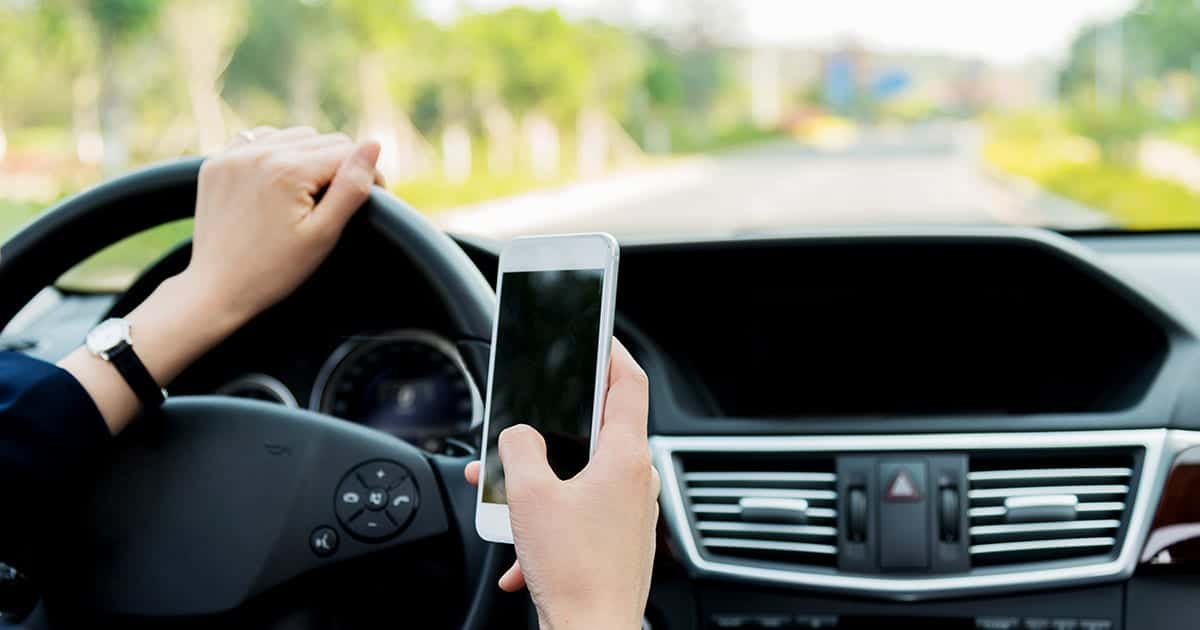
Misuse of a Wireless Telephone while Driving in Colorado – ‘Texting and Driving’
Misuse of a Wireless Telephone – 42-4-239
Texting and driving or being on the phone while driving is a relatively recent phenomenon that has unfortunately proved to be lethal, not only for the individual using their phone, but also for other individuals on and around the roadway. The National Highway Transportation Safety Administration reported that 2,841 people died as the result of distracted driving.
Because using a phone while driving, or “Misuse of a Wireless Telephone” as the statue calls it, is a relatively new offense, the legislature had to start by including definitions These definitions are important, because the statute later provides times in which it is proper for a person to use their cell phone based on these definitions.
First, the statute makes clear that a person under the age of eighteen shall not use a cellphone at all unless one of the specified exceptions applies.
Seconds, no one is permitted to text (or use a similar messaging service) while driving unless one of the specified exceptions applies.
The next section outlines when a person of any age may use a cellphone: “to contact a public safety entity” or “during an emergency.” Here, the definition section applies to define what an emergency is – essentially, if a person is in fear for their life or safety, believes a criminal act may be perpetrated against them, or is reporting an emergency situation or reckless driver. In addition, the statute makes clear that a person pulled over on the side of the road may use their cell phone for any purpose, because it specifically excludes being pulled over from the required “operating a motor vehicle”.
Section 6 of the statute establishes what is required for a person to be found guilty of misusing a cellphone. For a person under 18, an officer observing a person using their cellphone is sufficient proof to find that person guilty. However, for a person above 18, the officer must observe the person texting (or manually entering data) and must observe that this behavior was coupled with careless or imprudent manner. In other words, the mere act of texting is not sufficient to uphold a conviction.
If a person if convicted of misuse of a telephone, it is a class 2 misdemeanor traffic offense, unless a person is injured as a result of the misuse. If that occurs, then it is a class 1 misdemeanor traffic offense.
If you are charged with misuse of a telephone, you may have a defense that applies to your case. Contact our experienced Denver traffic attorneys today to get a free consultation.
In Colorado, you can be charged with theft even if you didn’t actually steal anything.
State law focuses on intent, not just action. Holding onto lost property, keeping something delivered by mistake, or even being misunderstood can lead to serious charges.
That’s why it’s crucial to understand how Colorado theft laws operate, what the actual penalties entail, and why consulting a Denver, CO criminal defense lawyer at the Law Office of Jacob Martinez as soon as possible could make a [...]
Carrying a concealed weapon is a serious responsibility—and in Colorado, the laws around it can be more complicated than they seem. If you carry a firearm or are thinking about getting a permit, it’s essential to understand your rights and obligations under state law. Because when things go wrong, they can go very wrong.
Even a simple mistake—like carrying in a restricted area or letting your permit lapse—can lead to criminal charges. That’s why knowing the law and calling a [...]
You might have heard police say, “You have the right to remain silent,” on TV or in movies. That’s part of what’s called Miranda rights. But these rights aren’t just for drama, they protect you in real life, especially if you’re questioned by police in Denver. Understanding and exercising these rights can make a big difference in your freedom and future.
If you find yourself in a situation where police are questioning you, it’s important to speak with a Denver [...]