

Constitutional Rights Applicable in Criminal Cases
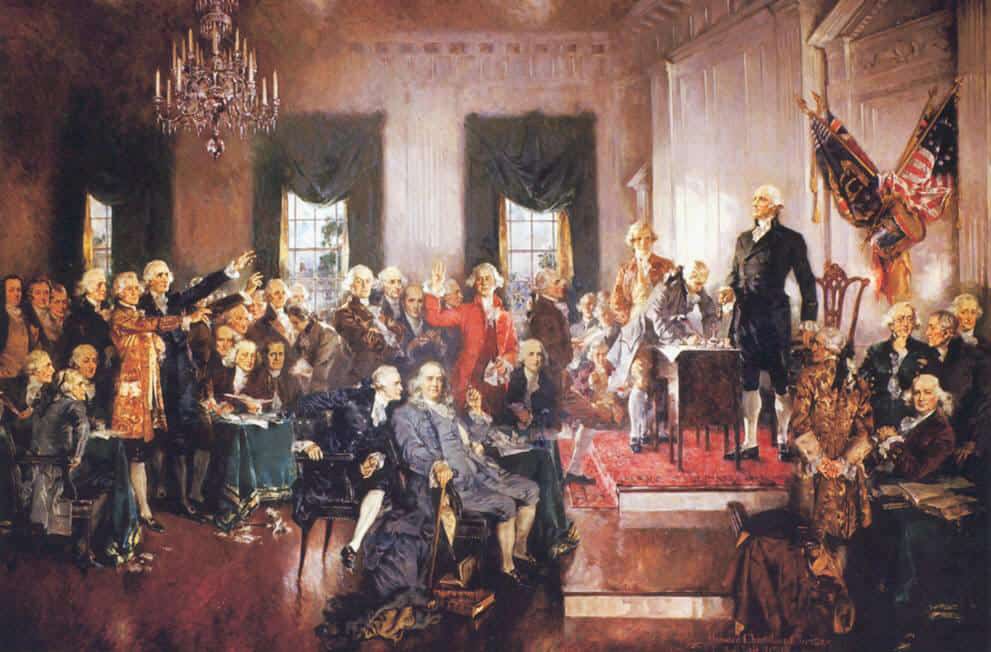
Constitutional Convention – Philadelphia. 1787.
As a Denver criminal defense attorney, it is impossible to practice law without a knowledge of criminal law’s origin. The United States Constitution serves as the foundation for criminal defense law in Colorado, and nationwide. From searches and seizures, to the right against self incrimination, to the right to be free from cruel and unusual punishment, the United States Constitution provides the source of origin for these very important rights. As we all learned in our history classes, the Constitution arose in the face of abuse. Members of the then British colonies were facing extreme taxation without any sort of recourse with the king, and as a result of unrest, faced a series of abuses that our founding fathers determined would never be repeated. These rights are essential to your case and your defense. If the police are found to have violated your rights, then the United State Supreme Court has determined that evidence the police gathered cannot be used against. In the words of the Supreme Court, that evidence is fruit from a poisonous tree. Contact an experienced criminal defense attorney from the Law Office of Jacob E. Martinez today.
Click the links below to find more information about the specific Constitutional provisions that serve as protections to those criminally accused:
Assault charges in Colorado can range from a misdemeanor accusation after a physical confrontation to a serious felony carrying years in prison. The difference usually depends on the alleged intent, the level of injury, whether a weapon was involved, and whether the alleged victim falls into a protected category under Colorado law.
That distinction matters immediately. A misdemeanor assault case may still carry jail time, fines, a permanent criminal record, and collateral consequences for employment, housing, licensing, and your reputation. [...]
A preliminary hearing in a felony case in Colorado is one of the earliest opportunities for the prosecution’s evidence to be tested before a judge. It happens after charges have been filed and the defendant has made an initial appearance, but before the case moves into trial court. The hearing is not about deciding guilt or innocence. Instead, the court is checking whether the prosecution has sufficient evidence to move the case forward.
Only one drug felony level in Colorado carries a true mandatory prison sentence. The other three carry presumptive ranges where a judge still has discretion, meaning the defense strategy in a DF2, DF3, or DF4 case looks completely different from that in a DF1 case. At the Law Office of Jacob Martinez, our Denver drug crimes attorney has spent more than a decade in Denver courts, working to achieve better outcomes for clients facing felony drug charges.